
If you've watched our film on the Bridge over the River Kwai with your class or your children, this short background will help you answer their questions with confidence. It's written for adults — you can share as much or as little as you judge right for the age you're teaching.
Why the railway was built
In 1942, during the Second World War, Japan had captured much of South-East Asia and was planning to push west into British-held India. Supplying its army in Burma (now Myanmar) by sea had become dangerous, so Japan decided to build a railway overland — a 415-kilometre line linking Thailand and Burma through hundreds of kilometres of mountainous jungle. It required more than 600 bridges. The British had surveyed a similar route in the 1880s and abandoned it as too difficult. Japan built it in just twelve months.
Who built it — and who is often forgotten
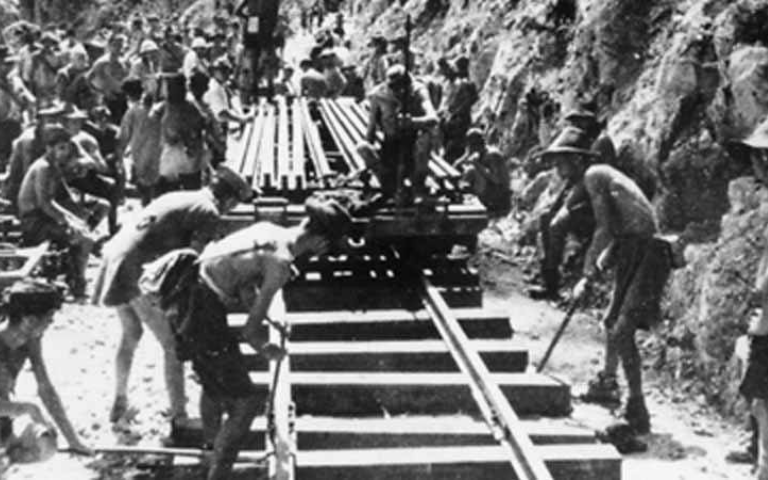
Two very different groups were forced to do the work. The first, and by far the largest, was made up of around 200,000 Asian civilian labourers — the largest groups were Burmese and Tamils from British Malaya, with Thais, Javanese and others in smaller numbers — who were forced or lured into the work. The second group was around 60,000 Allied prisoners of war, mainly British, Australian and Dutch soldiers captured after the fall of Singapore.
This is the part the popular story usually leaves out. The famous 1957 film has almost no Asian faces in it, yet Asian labourers made up the overwhelming majority of the workforce — and suffered the greatest losses. Roughly one in five Allied prisoners died; among the Asian labourers, close to one in two. Of the estimated 100,000-plus people who died building the line, the great majority were Asian civilians whose names were mostly never recorded.
Life and death on the line
Conditions were appalling. Workers laboured from dawn into the night — a brutal push in mid-1943 to finish on time was known as "the Speedo" — clearing jungle, cutting through solid rock by hand, and building bridges from green timber. Food was a thin rice gruel; medicine was almost non-existent. Disease swept the camps: cholera, malaria, dysentery, beri-beri and tropical ulcers. The deepest cutting on the line, dug by hand, became known as Hellfire Pass, because the sight of starving men working by torchlight looked like a scene from hell.
The story versus the truth
This is where our film's bigger question comes in. Many visitors come to the River Kwai because of a famous movie — but that film was mostly fiction. In the story, Allied officers proudly build a fine bridge; in reality, prisoners quietly sabotaged their work where they could, making weak joints and mixing poor concrete. The film's dramatic climax, a daring commando raid that blows up the bridge, never happened. The real bridges were damaged by Allied aerial bombing and repaired again and again.
None of this lessens the courage and endurance of the people who were there. It simply means the version most people carry in their heads — the exciting adventure — has quietly replaced the real history, and in doing so has almost erased the tens of thousands of Asian workers who died. That is exactly the habit of mind the film asks children to notice: we often visit the legend rather than the place, and a powerful story can bury the truth.
Visiting today
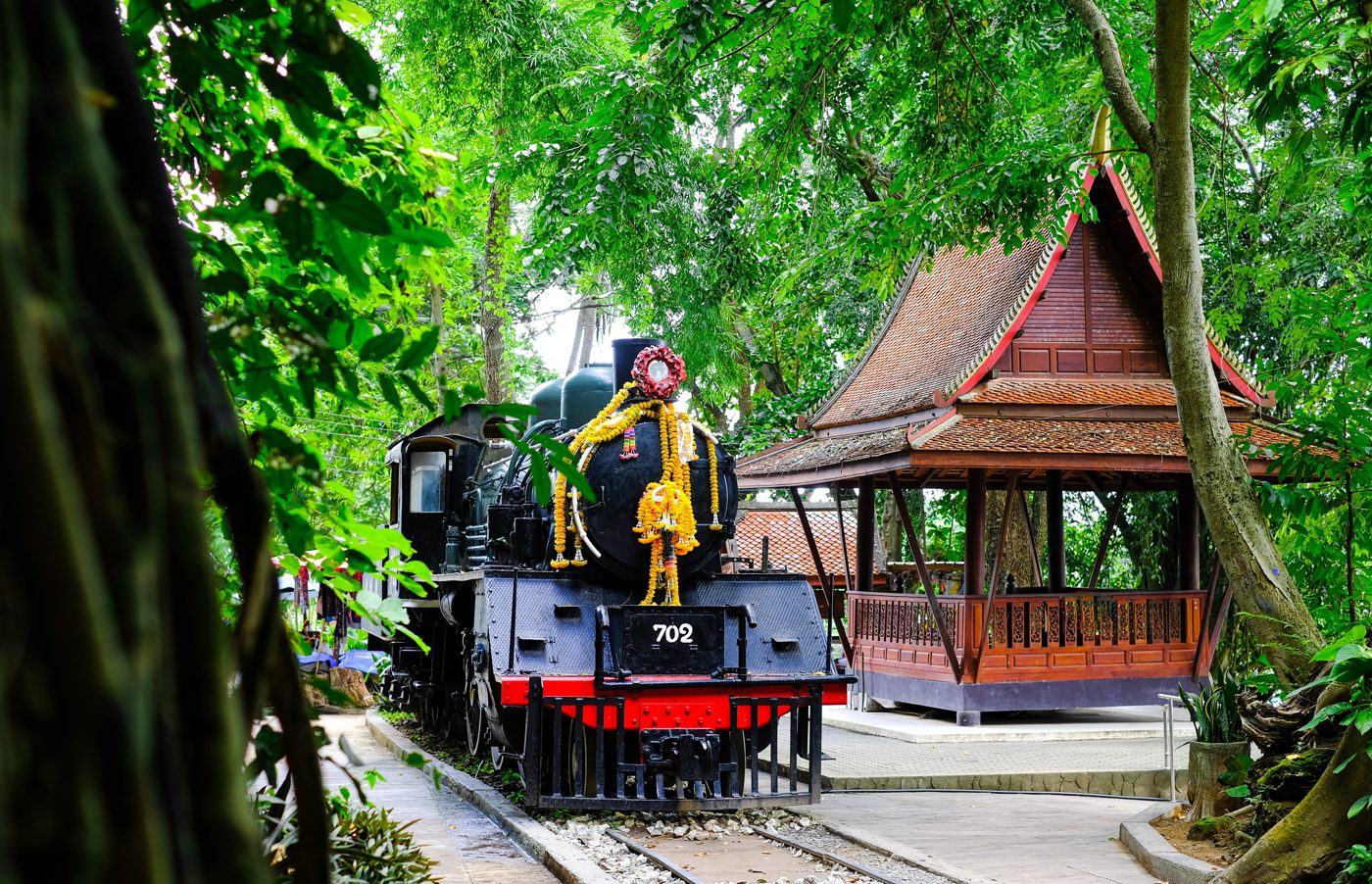
Part of the railway is still in use, and Kanchanaburi in Thailand is a place of remembrance. There is a war cemetery there, and at Hellfire Pass an Australian-supported memorial and walking trail follow the original track bed. Much of the rest of the line was torn up after the war or swallowed back by the jungle. If you visit, it's worth remembering everyone who suffered there — not only the soldiers whose story is well known, but the far larger number of Asian labourers whose story is only now being told more fully.
Where to learn more
- National Museum of Australia — Burma–Thailand Railway. A clear, well-illustrated overview with classroom notes. nma.gov.au
- DVA Anzac Portal — Burma–Thailand Railway and Hellfire Pass. In-depth history, survivor accounts and teaching resources. anzacportal.dva.gov.au
- Commonwealth War Graves Commission. Records and the Kanchanaburi War Cemetery, for anyone researching individuals. cwgc.org